
The ‘hero’s quest’ has become something of a buzzword in modern storytelling – especially in business writing and corporate content, but the principles behind mythic structures and archetypes emerge from deep ontological roots – bound up with human nature and the way our minds work.
In psychology the Hero’s Quest concept posits that we each have a guiding inner purpose in life – a raison d’être – even if it’s not readily apparent, and that, to fulfil this herculean duty is essential to one’s mental wellbeing. In fact, it is only by heroically overcoming this personal mission that we are able to tame the wilderness of our inner landscape, and render our thought-world a hospitable space.
And yet the quest is different for everyone. It could be raising children; having a family; prospering in a career in your chosen vocation; contributing to some larger idea that betters the world, or building some great civic work. It could be a lifelong passion project -some work of art, literature or music that has lived inside of you, and must be birthed into the world. If you retain it – think about it without acting on it – it can fester, and eat away at your self-esteem. A hero’s quest unfulfilled is could leave a lifelong narrative scar of yearning – a void that subsumes all possibility of meaning and fulfilment.
The quest characterises much of one’s inner monologue throughout midlife. Early adulthood is when you are supposed to start figuring out what YOUR unique hero’s quest is all about. Later life, with one’s personal dragon (hopefully) slain, is a time of inner respite, quietude and contemplation. Time to mellow out and look back on a life well-lived.
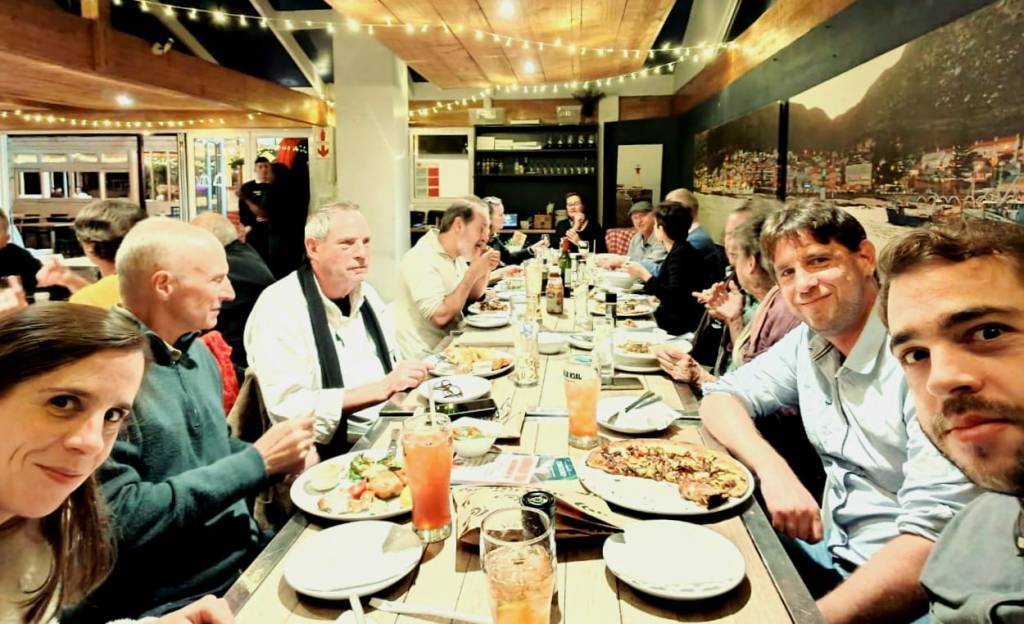
The launch of my father’s new book was an evening of understated revelry; a confluence of writers and storytellers, and a moment of narrative closure, not unlike the book’s own elegant denouement. Post-launch, friends and family gathered at The Brass Bell – an iconic Kalk bay bar / eatery, where you can witness the ceaseless drama of Atlantic waves crashing practically right up against the walls and windows of the restaurant as you enjoy the same ocean’s bounty.
“How did it feel?” asks Aunty Sue, an old friend of his from the Jo’burg days. Always swift with a writerly metaphor, my dad responds: “It’s a bit like taking a dinghy you’ve tinkered with in your garage for 20 years, and seeing it off, through the harbour, and out into the ocean.” I understood then that ‘We Two from Heaven’ is my father’s magnum opus.
“Tell your story with uncommon honesty” is some of the best writing advice I’ve ever heard. And that’s exactly what he did.
 Mike Whyle - Writer & Creative